
Guide
Pula underground: an afternoon at Zerostrasse
Photos 1
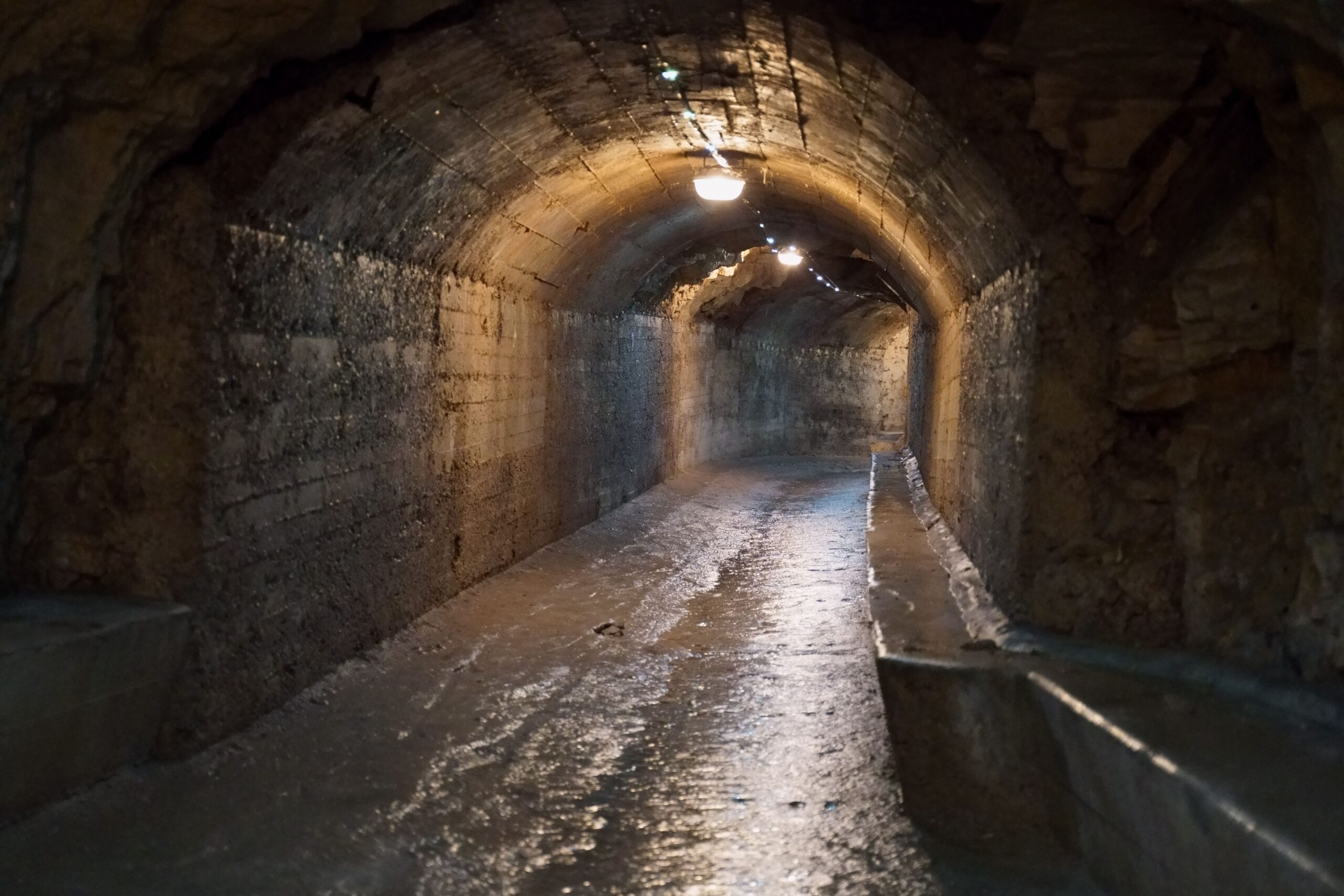
Make the tunnels your main stop and keep the rest of the afternoon flexible.
Jump to a section
Choose one main visit
When another sunny circuit of monuments feels like too much, start with Zerostrasse, the underground passages near the Twin Gates. Check current visiting arrangements and exactly what the ticket includes before leaving. Different entrances or connected attractions may follow different arrangements, so avoid building your afternoon around an old screenshot.
Use Carrarina 3a as your starting point. The Twin Gates make a useful landmark: their two Roman arches date from the second to third centuries. Pause here before going underground and distinguish the gateway from the much later tunnels. The entrance at the foot of Kaštel hill is your destination for this first part of the visit.
Why these passages exist
Zerostrasse belongs to Pula’s naval history. Before and during the First World War, the Austro-Hungarian authorities built tunnels beneath the city’s hills to shelter people, store ammunition and connect spaces underground. Pula was the monarchy’s principal naval port. Keeping that purpose in mind gives the corridors more meaning than simply using them to escape the sun.
The visitor tunnel identified by the tourist board as number 12 is about 400 metres long, with a central hall. Corridors are three to six metres wide and roughly two and a half metres high. At the central meeting point, look back along the different approaches: the branching layout is the feature to understand, rather than a single room to photograph.
Slow down below ground
Give yourselves one small thing to notice: the sound of footsteps, the construction or the changing light. Take photographs without holding up the passage. Bring a light extra layer if changes in temperature bother you, and let someone else lead for a while if you usually navigate every trip.
The museum describes four entrances arranged to keep air circulating and temperatures of around 14-18°C. There are no toilets in the tunnels; visitor toilets are in the fortress. The operator permits photography without flash or a tripod. These are useful details to settle before slowing down to look at the passageways.
From the lower tunnels to Kaštel
The lower Zerostrasse passages and the mezzanine beneath the fortress are distinct levels. The operator describes a lift connection between them and onward to Kaštel. The mezzanine has two corridors in an L-shaped arrangement, with former storerooms, kitchens and prison cells. If the lift is essential to your visit, confirm its availability at the entrance.
Choose the upper fortress if you want to carry the military-history theme further. Kaštel is a Venetian fortification with four bastions, built in 1630 and now home to the Historical and Maritime Museum of Istria. This changes the focus from underground shelter to the defence of the city and harbour.
Leave room after the exit
Back outside, choose lunch or another short walk before adding a second attraction. There is no need to fit the Arena, a beach and a boat trip into the remaining hours. If another museum space interests you, ask staff what is currently available and decide whether it deserves its own visit.
For a different continuation, make the Forum your next outdoor stop. It lies at the western foot of the central hill, close to the sea. The Temple of Augustus survives on this former civic and commercial square. Looking at its exterior gives the afternoon a Roman chapter without committing to another indoor visit.
Arrive at the right place
For the bus journey, distinguish Giardini-centar 2, Arena P&R and Pula-centar P&R: Pulapromet lists these as separate stops served by different routes. Check which one your service uses and save Carrarina 3a for the final walk. The Fort Centre has no car park of its own, so drivers should plan public parking separately from the museum entrance.
Connected to this story
Follow the links, save a favourite and explore at your own pace.
Connected destinations
Plan your time here
Choose dates and interests for your own ideas.
